


This article is a part of our OWL Profiles series, which takes a closer look at investment managers - their backgrounds, how they think, what they've built, and what shapes their approach to investing. Each profile is the product of conversations with the manager and research into the firm using OWL's data. We hope you enjoy getting to know these managers, and if there's anyone you think we should profile, please reach out!
The Stamford-based global value manager oversees roughly $1.9 billion and focuses on the markets everyone else has abandoned.
In the summer of 1994, Sean Fieler was a junior at Williams College with a girlfriend spending the season in Williamstown and no intention of leaving town to find work. So he applied for every investment internship he could find within walking distance, of which there were two.
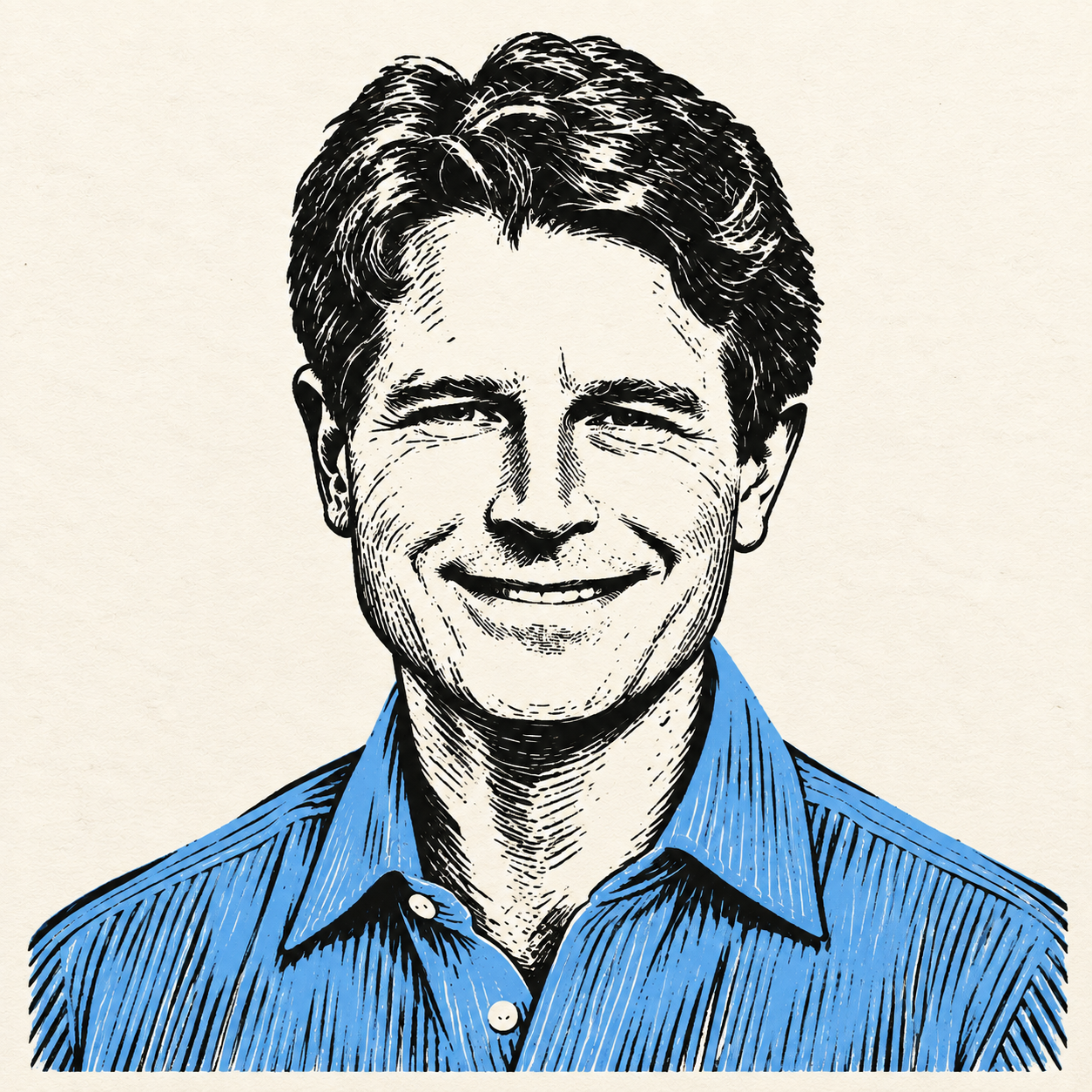
“One was a guy who smoked pot and traded the yield curve,” Fieler tells OWL. “He sized me up, and I was not a good fit for that internship, but I applied nonetheless, dutifully.”
The other was a fledgling partnership that a former Ruane Cunniff investor named Bill Strong was putting together that same summer, after he and a partner had wound down an earlier venture. Fieler and two other students were hired together as interns, and 32 years later he alone is still there.
That partnership became Equinox Partners, which Strong launched in November of 1994. Fieler joined full time the following summer alongside one of his fellow interns, who later left around 2001, while Fieler stayed and became partner, portfolio manager, president, and chief investment officer.
Strong moved to Florida in 2012 but remained involved with Equinox remotely as a consultant before resigning in May 2016. Strong’s resignation was the "culmination of a disagreement with [Fieler] regarding who should have investment authority over the funds. He did not resign over the investment position of the funds, with which he generally agreed,” Fieler told Equinox’s investors in a May 2016 letter. Fieler characterized the transition as “successful, but not amicable.”
Strong now runs Eschaton Opportunities, a Miami-based hedge fund employing a “contrarian, cross-capital structure, global value” strategy, according to its filings.
For Fieler, what began as an internship in a single unglamorous corner of the market is now an investment manager overseeing roughly $1.9 billion across a global long/short fund, an emerging-markets long-only fund, a precious-metals fund, and two separately managed accounts, according to materials shared with OWL.
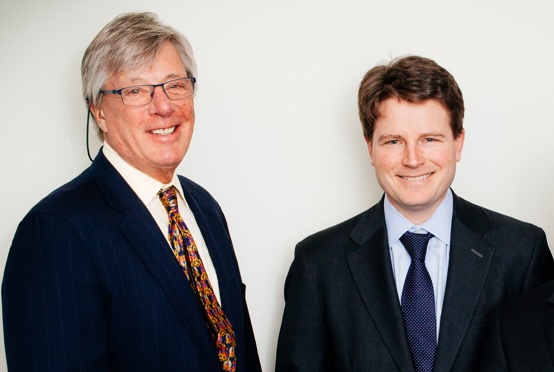
The education that mattered most happened that first summer, and it started with Danish banks. Fieler was assigned to a group of sleepy community lenders in Jutland that had come through the Scandinavian banking crisis of the early 1990s and were being conservative to a fault about how they recognized their recovering loan books.
“They were trading on 30% discounts to stated book,” he explains. “But if you looked at their true book, they were trading at 60-plus percent discounts to their true book. And there was just nothing going wrong.”
The banks had strong deposit franchises and were healing, yet the market had left them for dead. “That got me convinced that there were real inefficiencies in markets,” Fieler says. It is a conviction he has spent three decades acting on.
The formative event of his early career came a few years later, when the Asian financial crisis tore through the markets Equinox was learning to fish in. By late 1998 and early 1999, Fieler says, virtually everything worth owning across emerging markets was available at prices that no longer bore any relationship to the underlying businesses. Korea, the firm’s largest market at the time, had fallen close to 90% from its peak. Indonesia, which Equinox waited until 2001 to enter, had dropped 99% in dollar terms at its trough.
“Basically anybody who was in that market got wiped out,” he tells OWL. “So there was just nobody left. It was super inefficient. You could find great businesses that were just at very, very low multiples to any metric you wanted to imagine.”

Almost nothing since has been quite that extreme, Fieler is quick to note, but the lesson stuck. The best opportunities tend to sit inside the wreckage, in places short-term money has fled. Coming out of the emerging market crises it was emerging markets broadly; over the following decade it was commodities; more recently it has been the beaten-down stock markets of West Africa; and over the past couple of years, Brazil.
“We’re just always going through and trying to find great businesses that, for whatever reason, are misvalued,” Fieler says.
The firm’s name reflects an idea it has since moved past. Equinox was conceived as a balanced long/short fund, and for its first six years or so it was run that way. The trouble, Fieler found, was that the higher volatility of the short book kept overwhelming the work being done on the long side. For the last 26 years the firm has instead run a smaller, more variable short position, sized to add alpha through individual stock selection while also serving as ballast.
“We also always want an environment like what we have today to make sure that we have adequate shorts, that we can cover our shorts, and in a high-stress environment, have capital that will deploy on the long side,” he explains.
Short selling is inherently dangerous and requires diligent risk control, but it can also be entertaining, Fieler says. One of his favorite recent shorts was Wingstop, which the firm bet against starting in the summer of 2024 when the chain was trading around 100 times earnings.
“I like chicken wings. Chicken wings are fantastic. But Wingstop should not trade at 100 times earnings,” he tells OWL.
An earlier short, the car-wash roll-up Mister Car Wash, similarly drew his eye for being valued, absurdly in his view, on a software-style revenue multiple.
The firm breaks its portfolio into four buckets: mining, oil and gas exploration and production, emerging and frontier markets, and short equity. Mining and energy get their own line, primarily because those sectors have traded very inefficiently, Fieler tells OWL.
“This inefficiency combined with these sectors’ natural cyclicality has offered us some spectacular investment opportunities over the years,” he says.
That period included a nine-year bear market in gold miners, during which the GDXJ index of junior gold stocks fell more than 90% before bottoming in 2020. Learning to manage through it, he says, left the firm with both the expertise and the dry powder to buy the mining companies it owns today.
Conviction of that kind is not honed from a desk in Connecticut. Fieler once spent close to three months a year on the road and is now closer to one, but most of his seven-person research team still logs more than two months of travel annually.
“You’ve got to know the company, you’ve got to know the board, you’ve got to go to the jurisdiction, you have to know it really well,” he says.
Corporate governance sits at the center of the process. The firm treats its holdings as long-term partnerships with boards, sits on several itself, and, according to materials shared with OWL, will not invest in businesses it finds ethically objectionable.
“I know Equinox very, very well because I worked there for six and a half years, from 2008 to 2014, so I know how dedicated Sean is to investing and his thesis. It’s a tough job but he’s never lost faith in what he’s doing, and that’s not as easy as it sounds. I really admire him as a professional.” - Tomoyuki Izumi, an Equinox LP, and the founder of Takumi Capital Management
The holdings Fieler has picked to illustrate the approach run from Solidcore Resources, the gold miner spun out and renamed from Polymetal and now listed in Astana, Kazakhstan, which he calls “really undervalued” against more than $700 million in annual free cash flow, to Brazilian oil producer PRIO, Canada’s Troilus mining, Kosmos Energy, and, in the firm’s Kuroto emerging-markets fund, the Nigerian conglomerate United Africa Company and MTN Ghana. (OWL users can see more details on Equinox’s portfolio here).
According to investor materials reviewed by OWL, the flagship Equinox Partners fund has returned roughly 15% net annualized since its November 1994 inception, against roughly 11% for the S&P 500 over the same span, while the Kuroto Fund has compounded at roughly 15% net since 1999, against roughly 9% for the MSCI Emerging Markets Index. (OWL users can see more details on Equinox’s performance here).
The capital behind the firm comes largely from single- and multi-family offices and high-net-worth investors, with the investment team itself owning more than 14% of firm assets.
“I really respect Sean as an investor. As a base, he has a value investing principle, but he also knows so much about history, macroeconomics, politics; he’s a very mature, well-rounded investor and has a strong view of his own, and I believe in that.” - Tomoyuki Izumi
For a manager who has spent 32 years in the same seat, the throughline is remarkably close to what he saw that first summer in a group of overlooked Danish banks. The market, often enough, gives up on good businesses for reasons that have little to do with the businesses themselves.
“We’re always looking for something that, for whatever reason, is unjustly unloved by the markets,” Fieler says. Finding it is still the whole job, three decades later.
Important Information
This profile is editorial content published by Old Well Labs ("OWL") for informational purposes only. OWL is a data and information platform, not a registered investment adviser or broker-dealer, and provides no investment, legal, tax, or accounting advice. This profile is not advice, a recommendation, an endorsement, or a solicitation, reflects no due diligence or suitability assessment, and expresses no opinion on the manager as an investment.
Not an offer. This profile is not an offer or solicitation to buy or sell any security or fund interest and forms no part of any offering document. Any offering would be made only by the manager directly, through definitive documents, to qualified investors where permitted.
Manager-provided information. Performance figures and other details were provided by the manager or compiled from sources OWL believes reliable. OWL has not independently verified, audited, or restated this information beyond standard editorial fact-checking, and makes no representation as to its accuracy or completeness. Past performance is not indicative of future results.
Commercial relationship and independence. When deciding who to profile, OWL considers who we believe our current users will want to learn about. We use the same approach to identify managers to join the platform (including invitations from our allocator community), so readers should expect that many managers profiled in this series are also paying customers on the OWL platform. That commercial relationship is a financial interest readers should weigh when evaluating this profile. However, the manager did not pay for, commission, or sponsor this profile, and no payment was made for its production or publication. OWL selects profile subjects at its own editorial discretion, whether or not they are customers, and readers should not assume editorial independence beyond what is described here.
No reliance. Recipients should not rely on this profile for any investment decision. Investing in a private fund involves substantial risk, including total loss, illiquidity, and limited regulatory oversight. Recipients should conduct their own independent investigation and consult their advisors before making any investment decision.
Republication. This profile may not be incorporated into any manager's marketing, fundraising, or offering materials without OWL's prior written consent. Unauthorized use in connection with the offer or sale of securities may violate securities laws.
© 2026 Old Well Labs. All rights reserved.